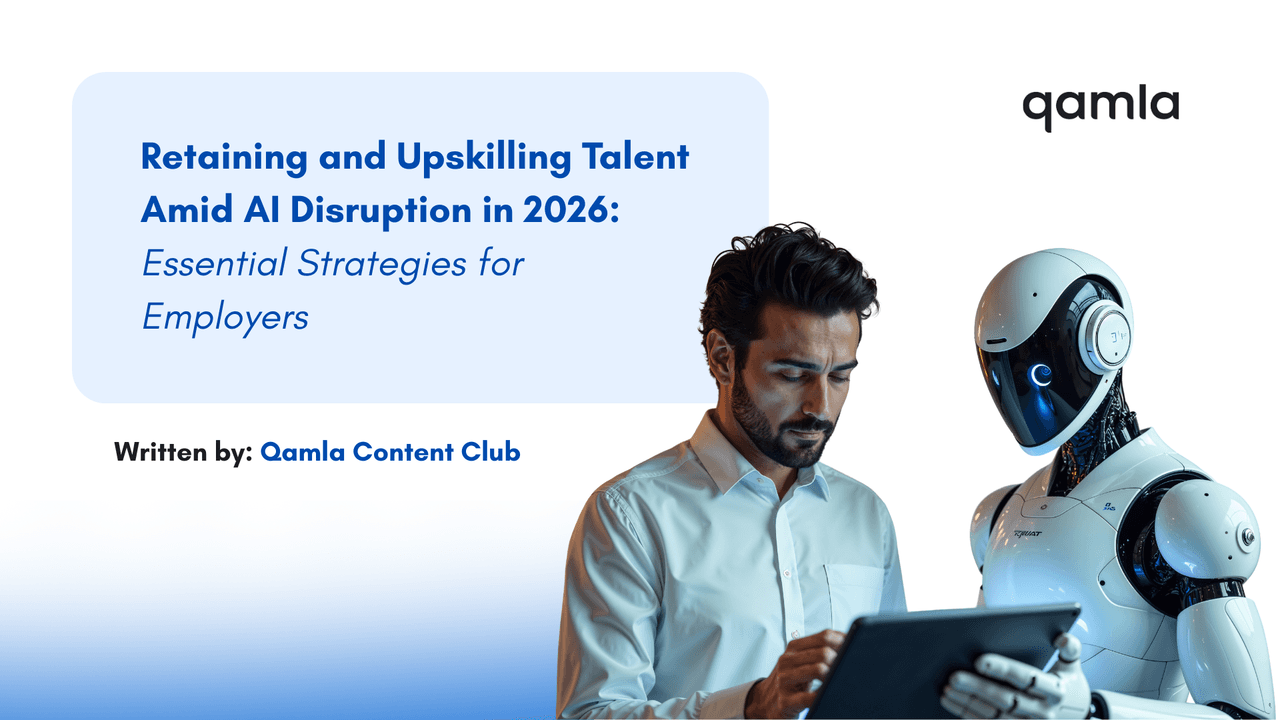
Picture this: Sarah, a dedicated mid-level manager in a bustling tech firm, logs into her workstation one morning only to feel a wave of dread wash over her. The AI tool her company rolled out last quarter has automated half her team's reporting tasks (tasks she once prided herself on mastering). "Am I next?" she wonders, her heart racing with anxiety about her family's future. This isn't an isolated nightmare; it's the lived experience of countless workers like Sarah in 2026, where AI's promise collides with human fears of obsolescence. By 2030, AI could displace 92 million jobs worldwide while creating 170 million new ones (a net gain of 78 million positions that sounds promising on paper). Yet, beneath this optimistic forecast lies a stark reality: Goldman Sachs estimates AI could affect up to 300 million full-time jobs globally, with 6-7% of the US workforce at risk of outright displacement if adoption accelerates. In 2026, as AI adoption leaps to 72% among companies (up from 50% in prior years), employers aren't just facing technological upgrades (they're navigating a human crisis of anxiety, burnout, and cultural upheaval). What if your organization's AI investments, meant to drive efficiency, instead trigger a mass exodus of talent, leaving behind shattered morale and lost institutional knowledge? This isn't hyperbole; McKinsey warns that without addressing the "human side" of AI, companies risk squandering potential productivity gains of up to 40%. Drawing from authoritative sources like the World Economic Forum (WEF), McKinsey, Gartner, Harvard Business Review (HBR), Forbes, BCG, SHRM, and UC Berkeley, this expanded guide uncovers eye-opening insights and data-backed strategies to retain and upskill your workforce. We'll reveal hidden risks, real-world ROI, and actionable blueprints to transform AI disruption into a competitive edge (because in 2026, your people aren't just assets; they're your only sustainable advantage, and their stories of resilience can inspire a path forward).
The Challenge: AI's Dual Impact on Jobs, Well-Being, and Organizational Culture (An Eye-Opening Reality Check)
Think of John, a veteran engineer in manufacturing, who after 20 years on the job, watches helplessly as AI systems take over assembly line optimizations he once handled manually. The pride in his craftsmanship fades into fear of irrelevance, echoing the emotional toll on millions. AI's promise of efficiency is undeniable, but its shadow side is reshaping the workforce in ways that demand urgent attention. The WEF's Future of Jobs Report 2025 projects that AI and related technologies will transform 86% of businesses by 2030, displacing 92 million roles while generating 170 million new ones (a net positive, but one fraught with transitional pain). McKinsey's analysis echoes this, estimating that 12 million US workers may need to switch occupations by 2030 due to AI-driven automation, particularly in back-office functions like data entry and basic analysis. Gartner adds a sobering layer: 80% of engineering roles will require immediate upskilling to match generative AI's pace, or risk obsolescence.
But the disruption isn't uniform (it's sector-specific and demographic, often hitting hardest those who've given years of loyalty). MIT and Boston University predict 2 million US manufacturing jobs lost by 2026 alone, while Goldman Sachs highlights vulnerabilities in office support (32% at risk) and administrative roles. Women face disproportionate exposure: 79% of US women hold high-risk automation jobs, per WEF data. This "culture dissonance," a term coined by HBR, arises when rapid AI integration erodes trust and engagement (52% of workers fear AI's impact on their roles, leading to what Gartner calls "culture atrophy," where innovation stalls amid anxiety).
Burnout amplifies the crisis, turning dedicated professionals into shadows of their former selves. UC Berkeley's groundbreaking research reveals that while AI boosts productivity by 73% in some tasks, it often creates a "stress cycle" by intensifying workloads (employees chase higher outputs, filling natural breaks with AI prompting, leading to cognitive fatigue and blurred work-life boundaries). Forbes corroborates: In AI-heavy environments, early adopters show the earliest burnout signs, with 47% of leaders admitting training sometimes masks automation intents. SHRM's data is alarming: Organizations without robust AI strategies see 27% of employees feeling "less loyal," spiking turnover risks. Gartner's 2026 trends report warns of "workslop" (rushed, low-quality output from over-reliance on AI, further eroding morale).
Eye-opening stat: PwC's 2025 survey found 75% of employees feel unprepared for AI, fueling inequality and disengagement. Without intervention, this could cost trillions: WEF estimates proactive reskilling could prevent redundancy for 120 million workers, unlocking $6.2 trillion in GDP gains.
Solutions: Implementing Upskilling Programs, Transparent Communication, and Ethical AI Integration
Imagine the relief on Maria's face (a customer service rep whose job was on the brink) when her company introduced upskilling that turned AI from a threat into an ally, reigniting her passion for growth. Proactive upskilling is your first line of defense. Mercer's Global Talent Trends 2026 shows 85% of employers prioritizing workforce upskilling, emphasizing AI literacy and critical thinking (the top priority for 73% of talent leaders). McKinsey recommends personalized learning paths via AI platforms, identifying gaps and saving 120 hours per employee annually when efficiencies are reinvested. WEF's Reskilling Revolution initiative estimates 1.1 billion jobs could transform by 2030, urging investments in durable skills.
Transparent communication builds trust, easing the knot of uncertainty in employees' stomachs. HBR's "radical transparency" approach: Share AI's evolutionary role, not elimination threats, to reduce fears. Case in point: Belgian telecom Telenet reinvested AI savings into reskilling, communicating alternatives, boosting retention by 16%. Gartner advocates HR-IT partnerships for ethical embedding, with audits preventing bias (critical as 39% of workforces face disruption in 2-5 years).
To enhance this, integrate AI for predictive analytics: TalentHR notes that AI can forecast churn risk, allowing proactive interventions like workload adjustments or development talks. Expanded implementation steps:
Assess and Plan: Use tools like iMocha for skills audits; WEF notes 59/100 workers need training by 2030.
Deliver Training: Blend online AI basics with workshops; BCG's AI Radar shows trailblazers upskill 75% of employees.
Measure and Iterate: Track via AI usage and sentiment; SHRM's 2026 report stresses monitoring burnout amid AI integration.
Ethical Focus: WEF's strategies include establishing AI offices for responsible adoption, plus gig work integration for flexible reskilling, per Sentinel Group.
Best Practices: Fostering Ageless Teams, Combating Burnout, and Redesigning Workflows
Recall Tom, a 55-year-old analyst, who felt sidelined by AI until a mentorship program paired him with a young colleague, sparking mutual respect and renewed purpose. In an AI era, demographics dictate adoption success. WEF advocates inclusive design: Involve older workers (50+) in AI development for accessibility, via mentorship where youth teach digital skills for resilience insights. Urban Institute recommends paid AI experimentation time to bridge gaps, noting older workers' assets like experience amid lower digital literacy. Eye-opener: 59% of 18-29-year-olds see AI as a threat; women hold 79% high-risk jobs (targeted upskilling is essential).
Burnout demands action, offering a chance to restore joy in work. SHRM emphasizes psychological safety: Feedback spaces prevent HBR's "intensification effect," where AI erodes well-being. Forbes advises reinvesting efficiencies into soft skills and flexibility, reducing stress. WEF's blueprint: Redesign workflows around human-AI complementarity for responsible growth.
For added depth, create internal talent marketplaces: Phenom's trends show they connect upskilling to mobility, reducing external hires and boosting retention by making growth visible. Practical tips expanded:
Cross-Generational Mentoring: Pair ages for learning; Urban Institute: Integrate durable skills into AI training.
Well-Being Initiatives: AI-driven wellness checks; mandatory downtime; BCG: Empathy frames AI as collaborator.
Ethical AI Governance: BAL Immigration Law: Ensure fair workloads; WEF: Access, skills, job pathways pledge.
Demographic
AI Risk Exposure
Best Practice (Urban Institute/WEF)
Older Workers (50+)
Higher in routine roles; 59% feel AI not for them
Inclusive training with hands-on practice; digital literacy focus
Younger Adults (18-29)
59% see AI as threat
Mentorship to build resilience; AI literacy integration
Women in US
79% in high-risk automation jobs
Targeted upskilling in AI ethics; inclusive design
Case Studies: Real-World Transformations That Prove the Power of Upskilling
To make this eye-opening, consider the emotional turnaround at Klarna, where initial AI-driven cuts led to regrets and rehiring for human touch in customer service, restoring trust and quality. Or Accenture, Walmart, and JPMorgan Chase: Their 2025 AI reskilling programs delivered 11.6x ROI through workshops and coaching, per SHRM data, turning employee fears into empowerment stories. Siemens and Toyota expanded apprenticeships, bridging generational gaps as WEF recommends, fostering a sense of belonging. Eye-opener: On's well-being program, including brain skills training, yielded 11.6x ROI, with employees reporting renewed vigor. These aren't anomalies (BCG's global survey: 80% of CEOs optimistic about AI ROI when paired with upskilling, highlighting tales of hope amid change).
ROI: Quantifying the Benefits (From Turnover Reduction to Trillion-Dollar Gains)
The numbers are staggering, but behind them are human victories (like reduced stress leading to happier families). BCG: Doubling AI spending yields 3.7x ROI per dollar, amplified by 55% efficiency via upskilling. TalentLMS: 20% turnover drop in AI-trained firms; McKinsey: 25% faster hires, 30% better retention in skills-focused orgs. Agentic AI adopters: 88% ROI, but only with skilled teams. WEF: Proactive reskilling averts 120m redundancies, adding $6.2t in GDP. For you: Up to 42% recruitment savings, sustained innovation. Global Growth Insights: $6.5b spent on AI certifications in 2026.
Future Outlook: Why 2026 Is the Tipping Point for AI-Resilient Workforces
SHRM's 2026 reports: 92% CHROs expect deeper AI integration, 84% upskilling in AI skills, offering a beacon of hope for empowered careers. WEF: By 2026, AI transforms education toward lifelong learning. Eye-opener: If ignored, AI gaps could entrench inequality, per PwC, deepening human divides. Act now to lead the shift, turning collective anxiety into shared triumph.
FAQ: Common Questions on AI Talent Retention in 2026
How can AI predict employee churn? Use analytics in HRIS platforms to spot early signs like disengagement, enabling interventions that boost retention by up to 20% (TalentHR).
Should we integrate gig workers? Yes (for flexibility); Sentinel notes gig roles complement AI upskilling, reducing burnout in core teams.
What's the ROI of internal mobility? Phenom reports 30% better retention via talent marketplaces, aligning skills with opportunities.
Final Thoughts: Secure Your Workforce's Future Today
In 2026's AI-saturated landscape, retaining and upskilling isn't optional (it's imperative), a chance to honor the human spirit amid machines. Harness these strategies to turn disruption into opportunity, like the stories of Sarah, John, and Maria who found renewal. Ready? Explore Qamla's tools, including Qamla Coach, for AI-ready matching. Your breakthrough awaits (embrace it with empathy, and watch your team thrive)!